
Living with persistent back or knee ache can severely impact your daily life, making even simple movements a challenge. That constant discomfort, stiffness, or sharp pain can steal your independence and keep you from activities you love, affecting not just your physical well-being but your peace of mind and spirit too. It’s a heavy burden, and finding relief becomes a central focus.
You’re not alone in seeking answers. Many people experience chronic pain that doesn’t respond to basic home remedies, prompting a deeper look into medical solutions. Understanding the range of available treatments, from less invasive approaches to specialized surgical interventions, is the first step toward reclaiming your comfort and mobility.
At Loma Linda University Medical Center – Murrieta, we are dedicated to helping our community navigate these complex health challenges. We offer a faith-driven approach to care, supporting the body, mind, and spirit as we explore options for back and joint pain. For those grappling with ongoing discomfort, our Back & Neck Pain Center provides a pathway to diagnosis and personalized treatment plans, aiming to restore your quality of life.
What Is Conservative Treatment for Back and Knee Pain?
Conservative treatment refers to non-surgical approaches used to manage pain and restore function. These methods typically involve a combination of therapies designed to alleviate symptoms, improve strength and flexibility, and promote the body’s natural healing without incisions or major interventions. It’s often the first line of defense for many musculoskeletal conditions.
Before considering any surgical procedure, physicians typically recommend a course of conservative treatment. This pathway prioritizes minimizing risk while maximizing the body’s natural healing capabilities. It emphasizes functional improvement and pain reduction through methods that don’t involve entering the body. This approach aligns with our patient-focused philosophy, ensuring we explore the least invasive options first.
“For most patients with musculoskeletal pain, conservative treatments like physical therapy and medication are highly effective and should be exhausted before considering surgical intervention.”
What Are Examples of Conservative Treatment for Pain?
Conservative treatments encompass a broad spectrum of therapies, tailored to individual needs and specific conditions. These can include physical therapy, medication management, injections, and lifestyle modifications, all aimed at reducing pain and improving function without surgery.
When you’re dealing with conditions like chronic knee pain or persistent back issues, a multidisciplinary approach often yields the best results. Our board-certified specialists often begin by recommending a structured plan that might include several of these conservative options. We’ve seen thousands of patients from the Murrieta-Temecula region find significant relief through these methods. For instance, in our discussions about managing knee arthritis, we always emphasize conservative treatment as a crucial first step.
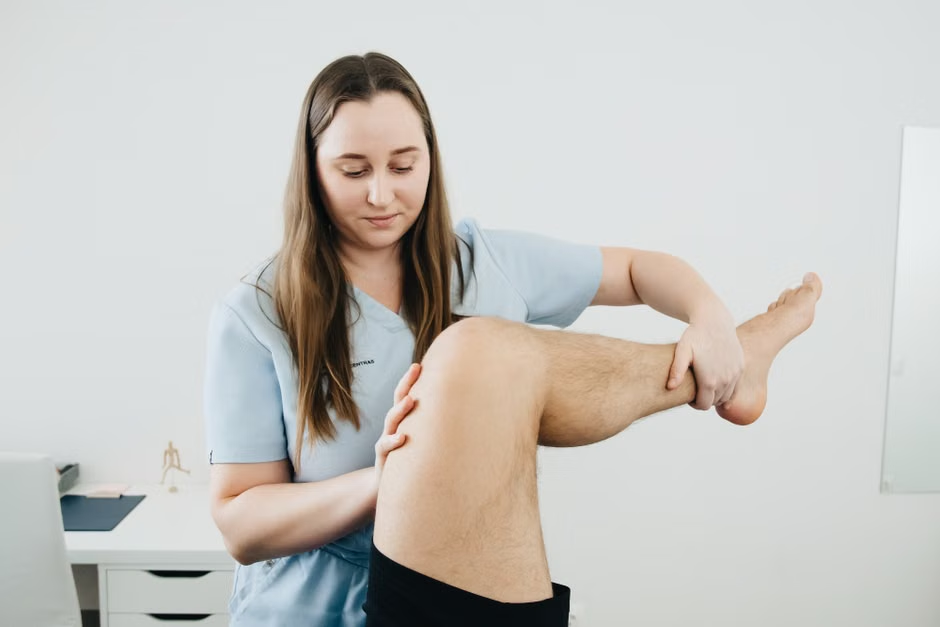
Common Conservative Treatment Examples:
- **Physical Therapy:** Specialized exercises to strengthen muscles, improve flexibility, and correct posture. This can include modalities like heat, ice, ultrasound, and electrical stimulation.
- **Medication Management:** Over-the-counter pain relievers (NSAIDs), muscle relaxants, or prescribed neuropathic pain medications, carefully managed to minimize side effects.
- **Injections:** Corticosteroid injections can reduce inflammation and provide temporary pain relief, especially in joints or around nerve roots. Nerve blocks can also be used.
- **Chiropractic Care:** Manual adjustments to the spine or other joints to improve alignment and reduce pain.
- **Acupuncture:** An ancient practice involving the insertion of thin needles into specific points on the body to stimulate natural pain relief.
- **Lifestyle Modifications:** Weight management, ergonomic adjustments at work, regular low-impact exercise (like swimming or walking), and stress reduction techniques.
What Are the Best Treatments for Acute Lower Back Pain?
For acute lower back pain, the best treatments typically focus on pain relief, restoring mobility, and preventing recurrence. This often involves a combination of rest, ice/heat therapy, over-the-counter pain relievers, and gentle movement or physical therapy, with a strong emphasis on avoiding prolonged bed rest.
Acute lower back pain often resolves within a few weeks with conservative care. Our expertise, honed over more than 15 years in the Murrieta community, shows us that early intervention with appropriate conservative measures is key. We work with patients to identify the source of the pain and create an individualized treatment plan that supports healing for the body, mind, and spirit.
However, it’s crucial to distinguish acute pain from chronic. While acute pain is often a sudden, short-lived response to injury, chronic pain persists for three months or longer. If you experience sudden, severe back pain accompanied by numbness, weakness in your legs, or loss of bladder/bowel control, it’s a medical emergency. Our Emergency Services are equipped to handle such critical situations with advanced care.
When Should Surgical Options Be Considered for Back or Knee Pain?
Surgical options are typically considered when conservative treatments have failed to provide adequate relief after a substantial period, or when there are signs of progressive neurological deficit, severe structural damage, or instability that could lead to further complications.
While we always champion conservative care first, there are circumstances where surgical intervention becomes the most appropriate path to long-term relief and improved function. In our practice, we’ve seen patients whose quality of life was dramatically enhanced by carefully considered surgical solutions. This is often the case for conditions like severe disc herniation, spinal stenosis, significant joint degeneration, or complex fractures that cause persistent pain and disability.
We work with board-certified orthopedic surgeons and neurosurgeons who employ advanced techniques and state-of-the-art technology. For example, our facility utilizes three state-of-the-art digital cath labs for diagnostic accuracy, which can also play a role in pre-surgical evaluation for pain conditions. Our comprehensive approach ensures that if surgery is recommended, it’s part of a well-thought-out plan focused on your best possible outcome.
“Surgery for chronic back pain is a last resort, but when indicated, it can provide significant pain relief and improved function, especially for conditions with clear anatomical causes such as disc herniation or spinal stenosis.”
Types of Surgical Interventions:
Depending on the condition, surgical options for back and knee pain can range from minimally invasive procedures to more extensive open surgeries. These may include:
- **Microdiscectomy:** A minimally invasive procedure to remove a portion of a herniated disc that is pressing on a nerve.
- **Laminectomy:** Removal of part of the bone (lamina) over the spinal canal to relieve pressure on nerves, often for spinal stenosis.
- **Spinal Fusion:** Joining two or more vertebrae together to stabilize the spine and reduce pain caused by motion.
- **Total Joint Replacement:** Procedures like total knee or hip replacement involve replacing damaged joint surfaces with prosthetic components, offering significant relief for severe arthritis. Our total knee replacement program has earned a Healthgrades 5-star rating for its excellent outcomes.
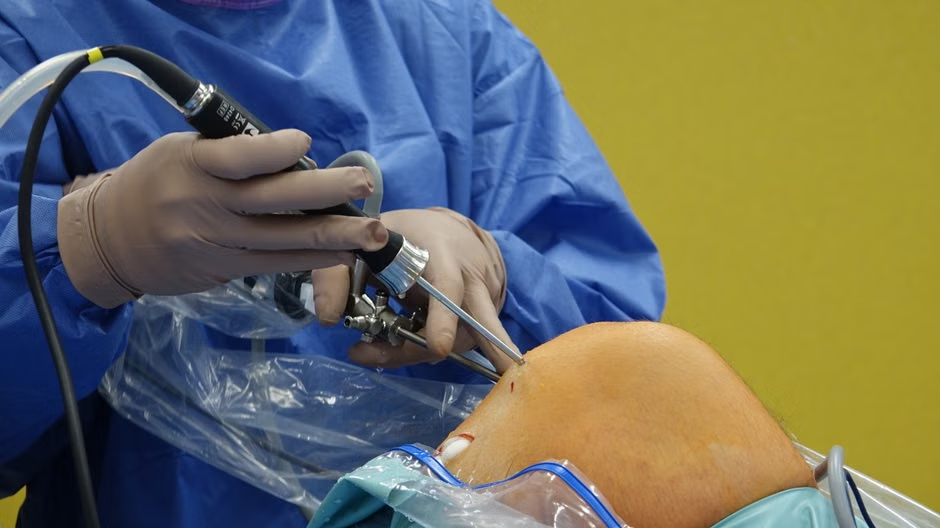
- **Arthroscopy:** A minimally invasive surgical procedure used to diagnose and treat problems inside a joint.
What to Expect After Back or Knee Surgery?
After back or knee surgery, you can expect an initial period of recovery focused on pain management, wound care, and carefully guided rehabilitation. While pain relief may not be immediate, a realistic timeline for significant improvement typically spans several weeks to months, with continued gains through dedicated therapy.
Recovery is a journey, not a sprint. We are dedicated to supporting you through every phase, from post-operative care to comprehensive rehabilitation. Our 3,600 sq ft rehabilitation therapy suite, complete with private treatment rooms and a therapeutic pool, is designed to help you regain strength, flexibility, and mobility. Our multidisciplinary clinical teams, including physical and occupational therapists, will work with you to create a personalized recovery plan.
It’s important to set realistic expectations. While many patients experience substantial improvement in pain and function, full recovery can take time. Adherence to your prescribed physical therapy regimen is crucial, as is making necessary lifestyle adjustments. Family involvement and support also play a vital role in encouraging and assisting you throughout the healing process, aligning with our holistic care approach for body, mind, and spirit.
Practical Tips for Managing Chronic Back and Knee Pain
Managing chronic pain effectively often involves a combination of medical treatments and self-care strategies. Here are some practical tips that can help improve your daily comfort and overall well-being:
- **Stay Active (Wisely):** Engage in low-impact exercises like walking, swimming, or cycling. Movement helps keep joints flexible and muscles strong, but always listen to your body and avoid activities that worsen pain.
- **Maintain a Healthy Weight:** Excess body weight puts added stress on your spine and knee joints. Losing even a few pounds can significantly reduce pain and improve mobility.
- **Practice Good Posture:** Be mindful of your posture whether you’re sitting, standing, or lifting. Use ergonomic chairs and proper lifting techniques to protect your back.
- **Prioritize Sleep:** Adequate rest allows your body to heal and recover. Ensure your mattress and pillows provide proper support for your spine.
- **Manage Stress:** Stress can exacerbate pain. Incorporate relaxation techniques like deep breathing, meditation, or gentle yoga into your daily routine to help calm your nervous system.
- **Nutrient-Rich Diet:** Focus on an anti-inflammatory diet rich in fruits, vegetables, lean proteins, and healthy fats. These foods can support overall health and reduce inflammation throughout the body.
Whether you’re exploring initial conservative treatments or considering more advanced options, our team at Loma Linda University Medical Center – Murrieta is here to guide you. We are dedicated to taking care of the entire person: the body, mind, and spirit. We believe that by providing patient-focused care with advanced technology and compassionate support, we can help you find lasting relief from chronic back and knee pain. Your needs are our goals, and we’re committed to working alongside you to achieve them, helping you return to a life of greater comfort and activity.