
The journey to welcoming a new life is filled with anticipation, questions, and a desire for understanding every step of the way. As you approach your due date, knowing what to expect during labor and delivery can help you feel more prepared and empowered. We believe that caring service comes with a high level of medicine, and that includes providing clear, compassionate information to support expectant parents.
From those early, subtle signs to the miraculous moment of birth, the process of labor is unique for every individual. We are dedicated to taking care of the entire person: the body, mind, and spirit, ensuring you feel supported throughout this profound experience. Our team at Loma Linda University Medical Center – Murrieta is here to guide you, offering specialized programs and individualized treatment plans as you prepare for this special time. You can learn more about our patient-centered care and commitment to your well-being on our hospital homepage.
Understanding the nuances of labor, including what is often called prodromal labor, can alleviate anxiety and help you distinguish between preliminary signs and true progression. We aim to equip you with the knowledge needed to navigate your birthing journey confidently, knowing our expert team is here to support your needs every step of the way.
What is Prodromal Labor and How Does it Differ from True Labor?
Prodromal labor, sometimes called “false labor” or “pre-labor,” involves contractions that are irregular, don’t intensify, and typically don’t cause cervical change. It’s the body’s way of preparing for true labor, often lasting for hours or even days. While it can be frustrating, it’s a normal part of the process, indicating that your body is getting ready for birth.
The distinction between prodromal labor and true labor can be subtle, especially for first-time parents. Prodromal contractions, though they may be strong, often don’t follow a predictable pattern. They might fade if you change positions, rest, or hydrate. True labor contractions, however, typically become longer, stronger, and closer together over time, persisting regardless of activity, and crucially, they lead to progressive changes in your cervix. As the Mayo Clinic explains, prodromal labor essentially prepares the uterus and cervix for the work ahead without actually initiating active labor.
In our practice, we often reassure expectant parents that prodromal labor is a common experience. It doesn’t mean your body isn’t working correctly; rather, it’s a sign of your body’s intricate design, meticulously preparing for delivery. Our board-certified specialists can help you understand these differences, ensuring you know when it’s time to come to the hospital.
What are the 3 Types of Delivery?
When it comes to bringing your baby into the world, there are generally three main types of delivery: vaginal delivery, cesarean section (C-section), and vaginal birth after cesarean (VBAC). Each approach has its own considerations, and your medical team will discuss the best option for your health and your baby’s safety.
The most common and often preferred method, a vaginal delivery, involves the baby passing through the birth canal. This can be spontaneous or may involve interventions like an epidural for pain relief or, in some cases, assisted vaginal delivery using tools like forceps or a vacuum extractor if labor needs a gentle push. We support natural labor progression whenever possible, emphasizing comfort and safety throughout the process.
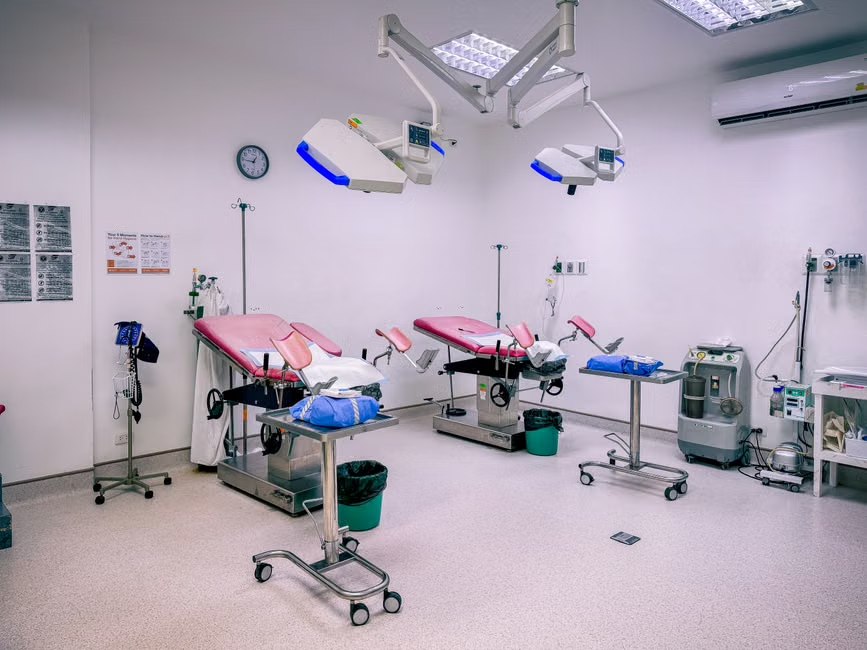
A cesarean section, or C-section, is a surgical procedure where the baby is delivered through incisions in the abdomen and uterus. This may be planned in advance due to certain medical conditions or complications, or it might become necessary during labor if unforeseen issues arise, such as fetal distress or lack of labor progression. Our state-of-the-art facilities and experienced surgical teams are prepared for both planned and emergency C-sections, prioritizing the well-being of both mother and child.
For those who have previously had a C-section, a vaginal birth after cesarean (VBAC) offers the possibility of delivering vaginally in subsequent pregnancies. Not every individual is a candidate for VBAC, and careful evaluation by your healthcare provider is essential. We work closely with our patients to assess their individual circumstances, always putting their safety and successful outcome first. Our team provides comprehensive information and support for those considering VBAC, helping them make informed choices.
What are the 4 Stages of Labor?
Labor is a progressive process divided into four distinct stages, each bringing you closer to meeting your baby. Understanding these stages can help you recognize key milestones and work effectively with your body during birth. These stages include early labor and active labor, pushing, delivery of the placenta, and the immediate recovery period after birth.
Stage 1: Dilation and Effacement
This is the longest stage of labor and is further broken down into three phases: latent, active, and transition. During this stage, your cervix thins out (effacement) and opens (dilation) in preparation for the baby’s passage. Contractions begin, becoming more frequent and intense as labor progresses.
- Latent Phase: Early labor signs often appear here. Contractions are usually mild and irregular, but they gradually start to cause the cervix to dilate up to about 6 centimeters. You might still be able to talk and move around comfortably. This phase can last hours or even days.
- Active Phase: This is when labor truly picks up. Contractions become stronger, more regular, and closer together, leading to more rapid cervical dilation from 6 to 10 centimeters. This is typically when most people come to the hospital. Managing pain becomes a significant focus, and our team offers various pain management options to support you.
- Transition Phase: The final and often most intense part of the first stage, transition involves dilation from 8 to 10 centimeters. Contractions are very strong, close together, and may feel overwhelming. This phase is usually shorter but challenging, demanding significant focus and support.
Stage 2: Pushing and Birth
Once your cervix is fully dilated to 10 centimeters, the second stage begins. This is the “pushing” stage, where you actively work to move your baby through the birth canal. It ends with the birth of your baby.
The length of this stage varies significantly. For first-time parents, it can last from a few minutes to several hours, while those who have given birth before often experience a shorter pushing phase. Our team will guide you on when and how to push, helping you conserve energy and work with your body’s natural urges. The moment your baby is born is truly unforgettable.
Stage 3: Delivery of the Placenta
After your baby is born, your body continues to work, expelling the placenta. This stage usually lasts only a few minutes, typically within 5 to 30 minutes after birth.
You may feel some mild contractions as the uterus contracts to detach the placenta. Our care team will assist with its delivery and ensure it’s intact. This is also a critical time for skin-to-skin bonding with your newborn, often referred to as the “Sacred Hour,” which promotes bonding and initiates breastfeeding. We prioritize this precious time for new families, understanding its importance for the body, mind, and spirit.
“The third stage of labor, though often overlooked in terms of length, is crucial for maternal health. Careful monitoring during this period helps prevent complications like postpartum hemorrhage, ensuring a safe transition into the postpartum period.”
Stage 4: Recovery
The fourth stage begins immediately after the placenta is delivered and typically lasts for one to two hours. This is a vital recovery period for the birthing parent, as the body begins to adjust after the intensity of labor.
During this time, our nurses closely monitor your vital signs, check your uterus for firmness to minimize bleeding, and provide comfort measures. We encourage continued skin-to-skin contact and support initial breastfeeding attempts. This stage is also a special time for your new family to bond and to take in the incredible experience you’ve just shared. Our commitment to patient-centered care extends well beyond delivery, supporting you through these initial hours of parenthood.
What to Look For: Signs of True Labor vs. False Labor
Distinguishing between prodromal labor and true labor is key for knowing when it’s time to head to the hospital. While every pregnancy is different, here are common signs to help you determine if labor is truly underway:
- Contraction Pattern: True labor contractions follow a regular pattern, becoming progressively stronger, longer, and closer together. False labor contractions are irregular and unpredictable.
- Intensity: True labor contractions increase in intensity over time. False labor contractions might be uncomfortable but usually don’t intensify significantly.
- Effect of Activity: True labor contractions persist and often strengthen with walking or position changes. False labor contractions may diminish or disappear with activity or rest.
- Location of Pain: True labor contractions typically start in the back and wrap around to the front of the abdomen. False labor pain is often concentrated in the lower abdomen or groin.
- Cervical Change: The most definitive sign of true labor is cervical effacement and dilation. False labor does not cause these progressive changes.
If you’re experiencing what you suspect might be early labor signs, especially if they are strong and regular, don’t hesitate to contact your healthcare provider. For any concerning symptoms, such as heavy bleeding or sudden, severe pain, remember that our Emergency Services are always available.
Nuanced Suitability: When is Induced Labor Considered?
While many labors begin spontaneously, sometimes medical reasons necessitate induced labor. This is the process of using medications or other methods to stimulate contractions and bring on labor before it starts naturally. Induction is a carefully considered decision, balancing the benefits of prompt delivery against the risks.
Induced labor may be recommended when the risks of continuing the pregnancy outweigh the risks of induction for either the birthing parent or the baby. Common reasons include reaching or going past your due date without labor starting (post-term pregnancy), preeclampsia or other high blood pressure disorders, gestational diabetes, premature rupture of membranes without contractions, or fetal growth concerns. Our multidisciplinary clinical teams, including board-certified specialists, will thoroughly evaluate your individual health circumstances before recommending induction.
“Labor induction can be a safe and necessary intervention in specific medical situations. However, it’s not without potential risks, and the decision should always be made after a comprehensive discussion between the patient and their healthcare provider, considering all alternatives and the gestational age of the fetus.”
— American College of Obstetricians and Gynecologists (ACOG)
Alternatives to induction, when appropriate, often involve careful monitoring and expectant management, allowing nature to take its course while ensuring safety. We always prioritize shared decision-making, providing you with all the information you need to feel confident in your birth plan. Our individualized treatment approach means we look at your unique needs and preferences when discussing labor options, including if and when induced labor might be right for you.
What to Expect: Preparing for Your Delivery and Recovery
Preparing for your delivery involves not just the birth itself, but also understanding the hospital stay and the initial recovery period. We want you to feel comfortable and informed about the entire process, so you can focus on welcoming your new baby.
Typically, after a vaginal delivery, you can expect to stay in the hospital for one to two days. For a C-section, the stay is usually three to four days. During this time, our compassionate nursing staff will closely monitor your recovery, help manage any discomfort, and assist you with newborn care and feeding. We offer breastfeeding support and guidance on caring for your new baby, recognizing that this is a significant learning curve for many new parents.
The initial recovery, often called the postpartum period, is a time of immense physical and emotional change. You’ll experience some bleeding, uterine contractions as your uterus shrinks, and general soreness, especially if you had a vaginal tear or C-section incision. Our team will provide pain management, monitor for complications like post labor hemorrhage, and offer education on what to expect as your body heals. We believe in caring for the whole family, and our support extends to ensuring you feel confident and cared for as you transition to parenthood.
Practical Tips for a Positive Birthing Experience
While labor and delivery can be unpredictable, there are many ways you can prepare to have a more positive and empowering experience. Our goal is to support you every step of the way, fostering an environment where you feel safe, respected, and well-cared for.
- Educate Yourself: Attend childbirth classes. Learn about different birthing options, pain management techniques, and what to expect during each stage of labor. Knowledge is power, and we offer patient education classes to help.
- Create a Birth Plan: While flexible, a birth plan communicates your preferences to your care team. Discuss your wishes for pain relief, labor positions, and newborn care with us in advance.
- Practice Relaxation Techniques: Learn breathing exercises, visualization, and meditation. These tools can be invaluable for coping with contractions and staying calm during labor.
- Choose Your Support Team: Decide who you want with you during labor. This might be your partner, a family member, or a doula. Having trusted support can make a significant difference.
- Pack Your Hospital Bag: Prepare a bag with essentials for yourself, your partner, and your baby. Include comfortable clothes, toiletries, snacks, and items that bring you comfort.
- Stay Hydrated and Nourished: During early labor, focus on staying hydrated and eating light, easily digestible foods. Your body needs energy for the work ahead.
At Loma Linda University Medical Center – Murrieta, we are dedicated to providing faith-driven, patient-focused care that supports you through one of life’s most significant events. Our commitment to advanced care, combined with our holistic approach to health, means we are here to ensure a safe and memorable birthing experience for you and your family. Your needs are our goals, and we are honored to be part of your journey.